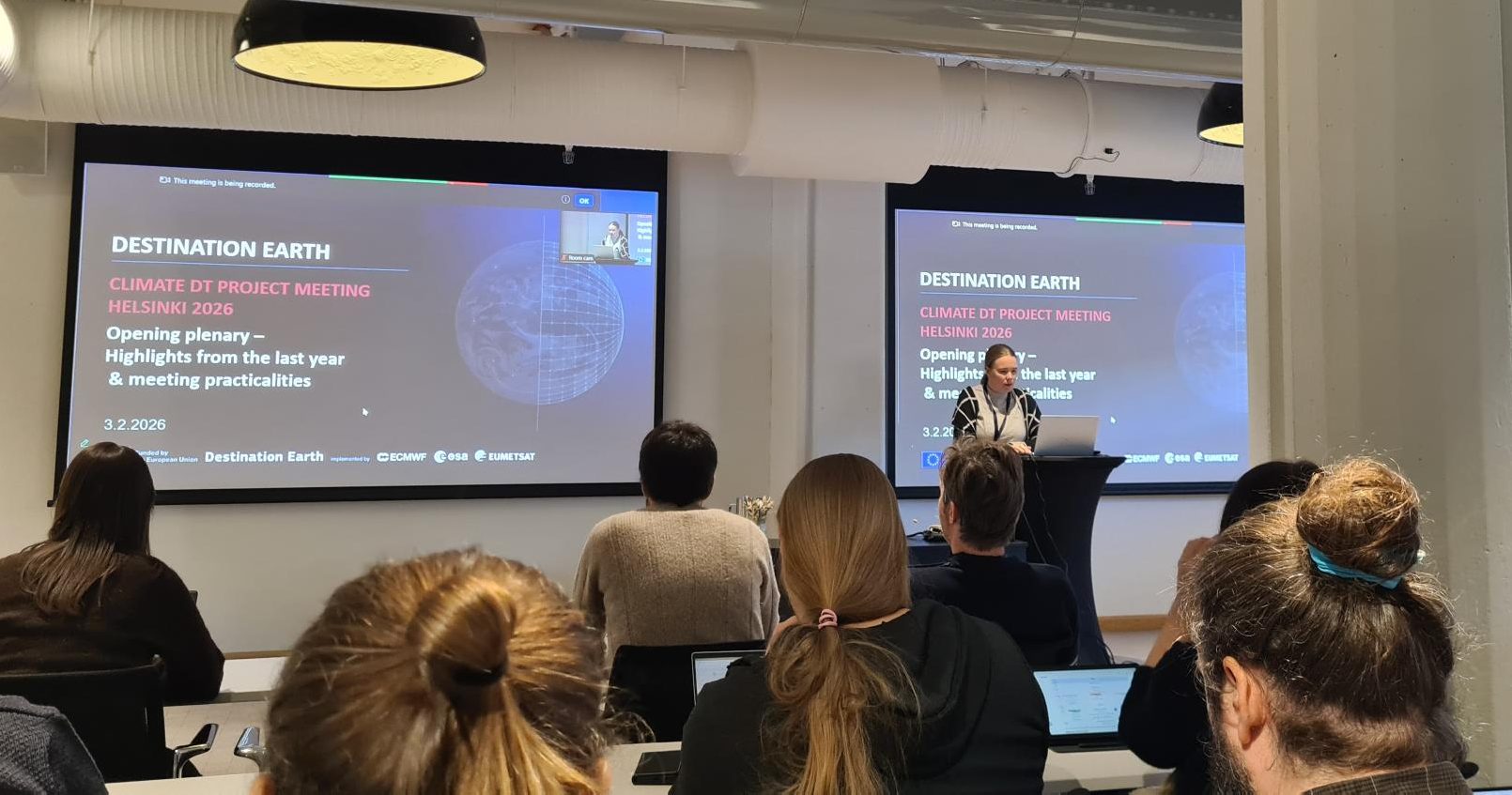
Partners of the Climate Change Adaptation Digital Twin (Climate DT) met recently in Helsinki for a two-day project meeting focused on advancing the operationalisation of the Climate DT within the European Commission’s Destination Earth (DestinE) initiative.
The Climate DT is implemented by a large European partnership led by CSC – IT Center for Science, bringing together climate modelling centres, national meteorological services, supercomputing centres, research institutes and industry partners across Europe, working in close collaboration with ECMWF.
The meeting brought together climate scientists, Earth-system modellers, HPC specialists and software engineers from across the consortium and ECMWF to review progress, strengthen coordination and align next steps as Phase 2 activities progress. Discussions focused on how the Climate DT framework is being operationalised to support both regular global climate simulations and tailored “what-if” and storyline scenarios, as DestinE prepares to enter sustained operations in its third phase, expected to start in summer 2026.
Operationalising an end-to-end climate modelling framework
Following a short opening session, day 1 moved quickly into parallel working sessions addressing key elements of Climate DT operationalisation. Discussions focused on how an end-to-end climate modelling framework — from global kilometre-scale Earth-system simulations through to impact-sector applications — can be run in a traceable, monitored and quality-controlled manner, drawing on established practices from operational numerical weather prediction.
A dedicated session on model evaluation examined how continuous monitoring and evaluation are embedded directly into Climate DT workflows, supporting model developments and consistent interpretation of results.
The combination of online evaluation, structured diagnostics, and coordinated comparison was highlighted as a key mechanism to support calibration and consolidation of the Climate DT framework as it moves towards regular, repeatable simulation cycles.
Simulation protocols and portfolio
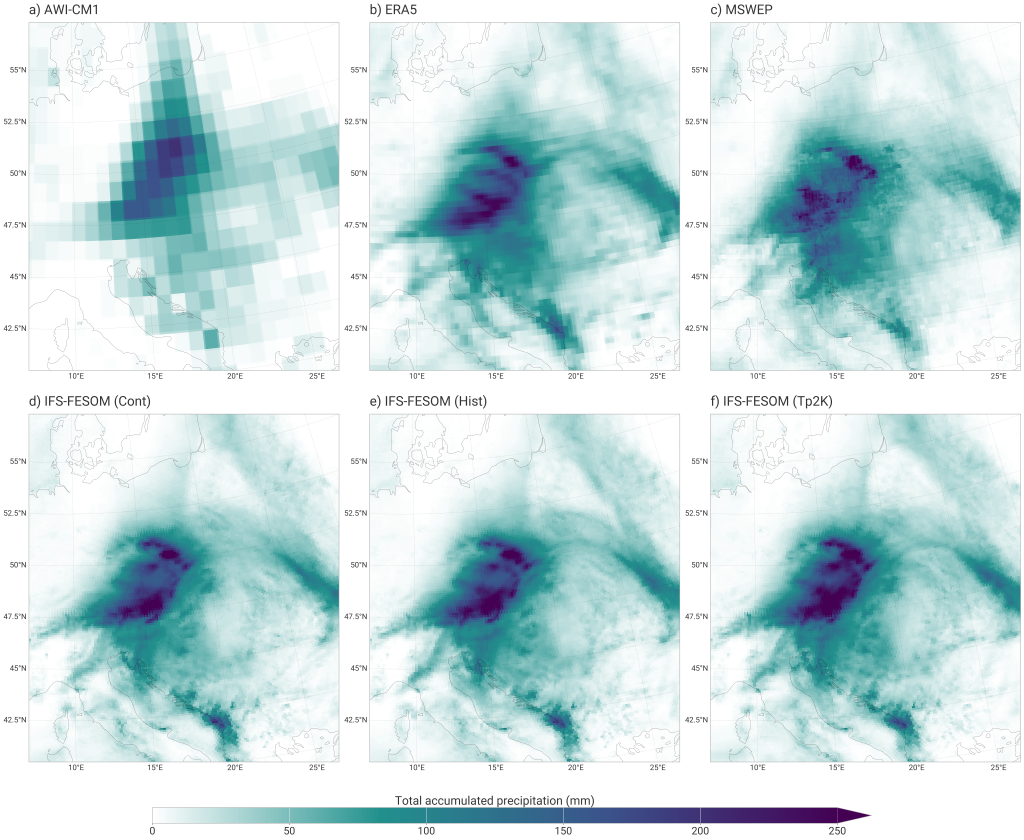
Partners reviewed the simulation protocols used to generate ongoing and future Climate DT simulations. The second generation of Climate DT simulations is now being produced and will become available to DestinE users in the coming months. This encompasses climate projections covering the period from 1990 to 2050 using the three Earth-system models – IFS-NEMO, IFS-FESOM and ICON, at 5 km resolution. It also includes storyline simulations exploring how recent extreme events (from 2017 to the present) would unfold under past and plausible future climate conditions. Discussions also covered the next climate simulations planned for this year, to support uncertainty quantification and enable exploration of other future climate scenarios.
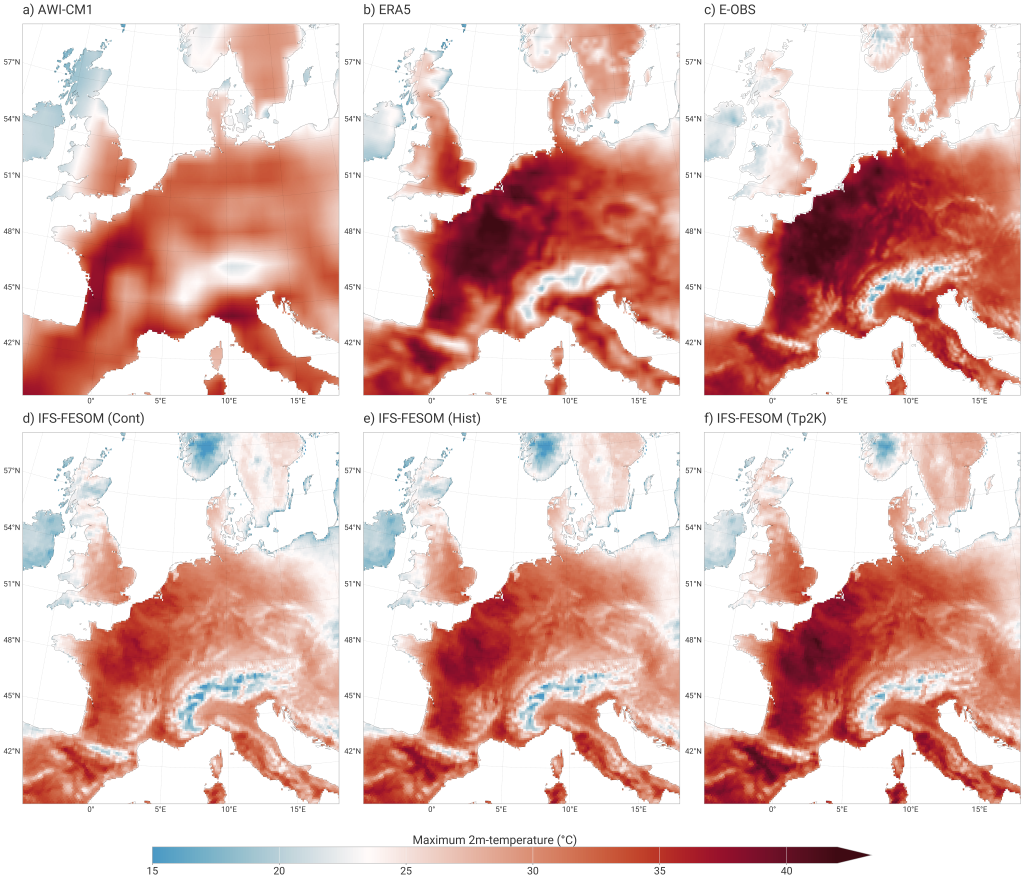
The Climate DT is designed to complement existing international climate simulation efforts such as CMIP and CORDEX, by providing an operational framework for global kilometre-scale climate simulations and scenario exploration. Partners therefore emphasised the importance of aligning simulation protocols, forcings and evaluation practices with established climate-community standards, enabling results to be interpreted consistently across the consortium and compared with existing global and regional climate simulations. This alignment is essential for ensuring scientific credibility while supporting the operational use of Climate DT outputs.
Climate DT simulations produced during Phase 1 are already available via the DestinE Platform, allowing users to explore the first prototype global kilometre-scale climate simulation outputs.
From climate simulations to impact-relevant information
Beyond producing climate simulations, partners discussed how Climate DT outputs are translated into information relevant for impact and adaptation studies. Sessions focused on workflows that connect climate simulations to sector-specific indicators for areas such as water management, energy systems, and extreme weather impacts.
This translation relies on novel approaches, including one-pass algorithms and embedded impact applications within the Climate DT workflows, which derive impact-relevant information directly from the evolving climate simulations. These approaches allow climate information to be condensed and tailored for downstream use while remaining consistent with the underlying climate simulations.
Strengthening coordination across a distributed operational environment
Another major focus of the meeting was coordination across the distributed Climate DT environment — spanning multiple institutions and EuroHPC supercomputing systems, including LUMI and MareNostrum 5, as well as the DestinE infrastructure, including the data lake and platform. Partners reviewed how collaboration mechanisms support day-to-day operations, from simulation execution on distributed HPC systems to monitoring, evaluation, data handling, accessibility, and user support. Discussions covered how technical information is exchanged and documented, how constraints are communicated, and how responsibilities are clearly assigned and coordinated across institutions.
The participants discussed a set of concrete coordination practices that are essential for maintaining robustness and efficiency of Climate DT operations, including regular focused technical exchanges, clear documentation, and transparency on roles and constraints across the partnership. These coordination mechanisms are also critical for ensuring traceability, accountability and effective data access, supporting the operationalisation and uptake of Climate DT outputs.
AI-ready datasets for the next generation of climate applications
Looking ahead, the meeting also focused on how Climate DT workflows, implemented as part of the Digital Twin Engine, support the production of AI-ready datasets. Partners discussed how outputs from Climate DT simulations are transformed, as part of the operational workflow, into datasets that can be directly used to train machine-learning models and applications.
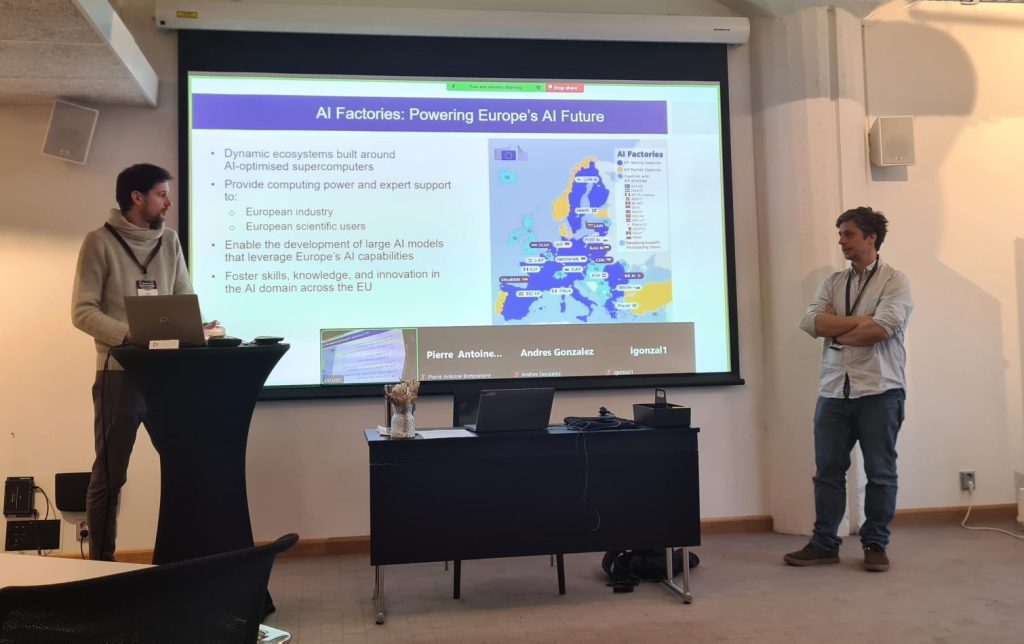
These datasets are already being used to train the DestinE climate emulator and a range of impact-sector machine-learning demonstrators. In the next phase of DestinE, they will also feed into Europe’s emerging AI Factories, supporting the development of a new generation of AI applications for climate adaptation and climate-impact analysis.
Looking ahead
The meeting highlighted how Phase 2 activities are advancing the operationalisation of a comprehensive Climate DT framework, encompassing Earth-system modelling workflows, impact-sector applications, monitoring and evaluation, data governance, and coordination across institutions and HPC systems. Discussions focused on how this framework can be further strengthened to support sustained operations in Phase 3, while continuing to evolve by incorporating advances in modelling, computing, and AI.
The Climate DT, procured by ECMWF in the framework of Destination Earth is developed through a contract led by CSC-IT Center for Science and includes Alfred Wegener Institute Helmholtz Centre for Polar and Marine Research (AWI), Barcelona Supercomputing Center (BSC), Max Planck Institute for Meteorology (MPI-M), Institute of Atmospheric Sciences and Climate (CNR-ISAC), German Climate Computing Centre (DKRZ), National Meteorological Service of Germany (DWD), Finnish Meteorological Institute (FMI), Hewlett Packard Enterprise (HPE), Polytechnic University of Turin (POLITO), Helmholtz Centre for Environmental Research (UFZ) and University of Helsinki (UH).
Destination Earth is a European Union funded initiative launched in 2022, with the aim to build a digital replica of the Earth system by 2030. The initiative is being jointly implemented by three entrusted entities: the European Centre for Medium-Range Weather Forecasts (ECMWF) responsible for the creation of the first two ‘digital twins’ and the ‘Digital Twin Engine’, the European Space Agency (ESA) responsible for building the ‘Core Service Platform’, and the European Organisation for the Exploitation of Meteorological Satellites (EUMETSAT), responsible for the creation of the ‘Data Lake’.
We acknowledge the EuroHPC Joint Undertaking for awarding DestinE strategic access to the EuroHPC supercomputers LUMI, hosted by CSC (Finland) and the LUMI consortium, Marenostrum5, hosted by BSC (Spain) Leonardo, hosted by Cineca (Italy) and MeluXina, hosted by LuxProvide (Luxembourg) through a EuroHPC Special Access call.
More information about Destination Earth is on the Destination Earth website and the EU Commission website.