From 3–5 March 2026, experts from ECMWF and partner institutions across Europe gathered in the Netherlands for the Destination Earth (DestinE) AI Tooling Workshop, marking an important step forward in advancing machine learning (ML) capabilities within this European Commission’s initiative.
Machine learning and artificial intelligence have progressed rapidly within the second phase of DestinE, the European Commission’s ambitious initiative to build digital twins of the Earth. This 2.5-day workshop brought together experts from ECMWF, national meteorological services, supercomputing centres and other partner institutions to tackle a shared challenge: how to strengthen the technical foundations for using AI in weather and climate predictions, and how to deepen collaboration on co-developing the tooling infrastructure underpinning the AI models.
Through a combination of technical presentations, hands-on sessions, and collaborative discussions, participants explored how to build scalable, robust, and operational AI models. Key topics included the development of ML pipelines to transform complex Earth system data into AI-ready datasets, strategies for large-scale training and retraining on EuroHPC systems, the design of modular ML-based Earth system models, and the adoption of software development practices that ensure testing, validation, and reproducibility.
Strengthening the technical backbone of AI in DestinE through collaboration
A central theme throughout the workshop was strengthening the technical foundations required to leverage ML within DestinE. Irina Sandu, Director for Destination Earth at ECMWF, and Maarten van Aalst, Director General of the Royal Netherlands Meteorological Institute (KNMI), opened the workshop by emphasising that collaboration and knowledge sharing are essential.
“As Director of the Netherlands MET service, it’s exciting to welcome all these European experts to the Netherlands to work on a European endeavour under Destination Earth to build the best machine learning models and to provide resilience and economic prosperity for Europe.” – Maarten van Aalst.
Irina Sandu added: “The rapid progress we’re seeing in AI for weather and climate prediction is remarkable, but none of it happens in isolation. DestinE’s strength lies in bringing together expertise from across Europe, from ECMWF to national meteorological services, supercomputing centres and research institutions. This workshop is about sharing technical knowledge and about accelerating the collaboration on the tooling infrastructure that will allow us to develop operational AI models that are robust and reliable.”
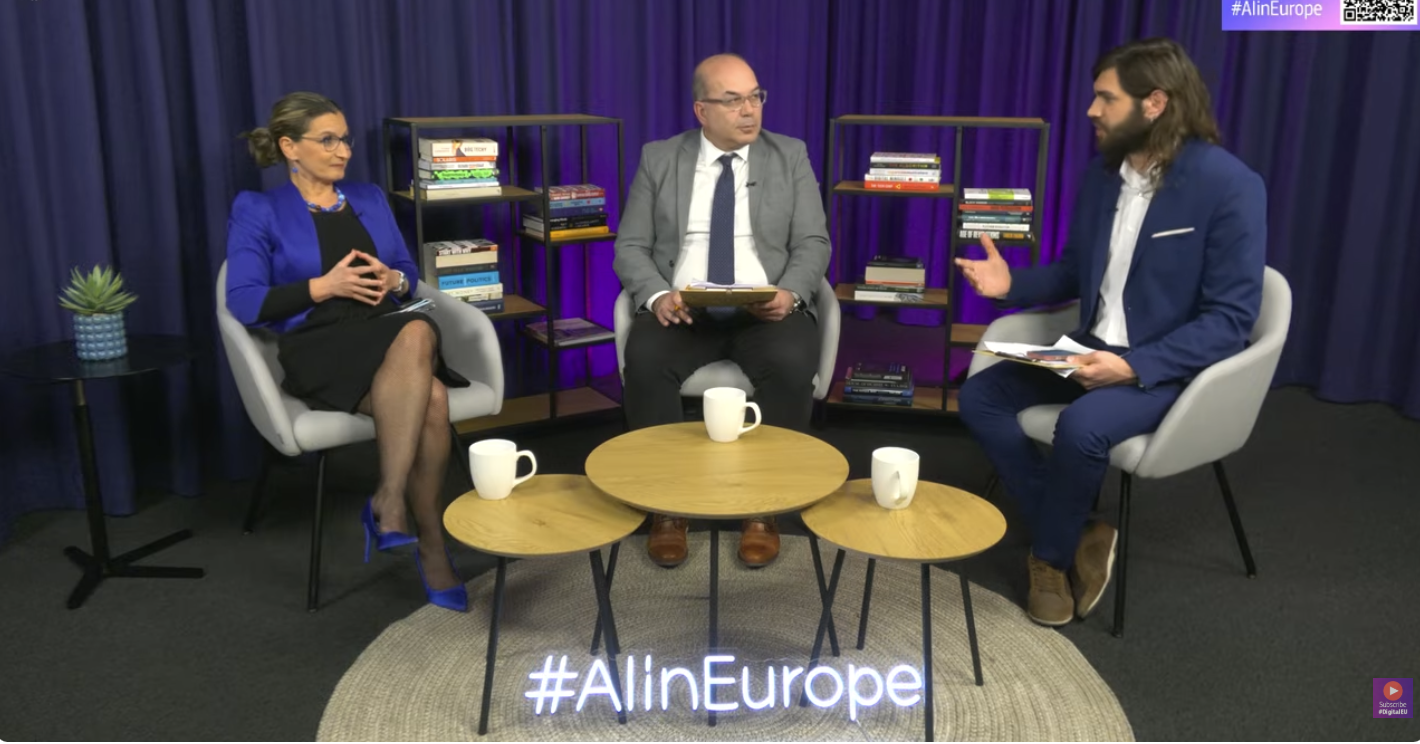
Hear more insights into what makes collaboration on AI tooling under DestinE so special in the video below.
Anemoi: A collaborative open-source framework
Matthew Chantry, Strategic Lead for Machine Learning at ECMWF, provided an overview of recent advances in AI for weather and climate prediction, highlighting the growing ecosystem of tools supporting these developments.
A special focus of the workshop was Anemoi, an open-source, Python-based framework developed collaboratively by ECMWF and several European national meteorological services. Anemoi provides a highly flexible framework for building, training, and operationalising data-driven forecasting models for weather and other Earth system components. It underpins ECMWF’s operational AIFS model, the Earth system ML components developed in DestinE, and other European AI models such as AICON developed by Deutscher Wetterdienst (DWD) and Bris developed by the Norwegian Meteorological Institute (MET Norway).
Beyond its technical capabilities, Anemoi represents a shift towards shared development: enabling institutions across Europe to contribute to, adapt, and benefit from a common AI software framework.
Matthew highlighted that robust software engineering practices, including shared standards for testing, validation, and reproducibility, are essential to making such collaboration effective and sustainable. In his presentation, he also gave a brief overview of other initiatives, through which ECMWF and its Member States advance AI weather prediction capabilities, including the EUMETNET-AI initiative and the Horizon Europe WeatherGenerator project.
Discover more about Anemoi in the animation below.
Advancing collaboration on Anemoi through shared tools and frameworks
The workshop also provided a platform to participants from national meteorological services and partner institutions to share progress on AI tooling in their organisations.
Sophie Buurmann, Data Scientist at KNMI, and Aram Salihi, ML Engineer and Researcher at the Norwegian Meteorological Institute (MET Norway), presented updates on regional multi-domain data-driven modelling. This approach, building on Anemoi, aims to generalise training to multiple datasets and atmospheric scales, enabling the production of forecasts over various domains, including over regions with limited observational coverage.

Additional presentations highlighted developments across Europe, including building AI systems on cloud infrastructures, presented by the Head of AI Operations and Data Engineering James Penn from the UK Met Office; lessons learned from the recently operational AICON model at Deutscher Wetterdienst (DWD), shared by DWD Head of Data Assimilation and Predictability Jan Keller; and the operationalisation of a regional AI model for Switzerland at MeteoSwiss, presented by Scientific Software Developer Carlos Osuna and Co-Lead for ML Integration Daniele Nerini.
Panel discussion: Making collaboration scalable and sustainable
The first day concluded with a panel discussion moderated by Florian Pappenberger, ECMWF’s Director-General. Panellists included Laure Raynaud, Team Leader for Weather Forecasting & AI at Météo-France; Jørn Kristiansen, Director of the Development Centre for Weather Forecasting at MET Norway; Oliver Fuhrer, Head of Numerical Prediction at MeteoSwiss; and Roland Potthast, Director for Meteorological Modelling and Analysis at DWD.

The panel discussed key success factors for Anemoi: showcasing real-world impact, maintaining flexibility, and a willingness to continuously adapt or rebuild this powerful software ecosystem. Lessons from past consortia developing physics-based models underline the importance of open collaboration across institutional and national boundaries. Discussions also touched on accelerating progress while addressing sustainability, trust, and the role of public services. The consensus was clear: Anemoi needs to remain a dynamic ecosystem that balances innovation, cooperation, and long-term sustainability.
“Collaboration is at the heart of Anemoi’s success. By bringing together expertise from across Europe, we ensure our AI solutions remain both innovative and resilient in the face of new challenges,” concluded Florian Pappenberger.
Hands-on breakout sessions
The second day featured hands-on breakout sessions, giving participants the opportunity to delve deeper into varied aspects of the AI software infrastructure that underpins the development of AI models for weather and climate. The groundwork for the day was laid by introductory presentations from ECMWF scientists Jan Polster and Cathal O’Brien, who provided insights into how European supercomputing infrastructure, including EuroHPC systems, can be leveraged to support large-scale AI development and continuous retraining.

This was complemented by a presentation from Francisco Doblas-Reyes of the Barcelona Supercomputing Center, who presented the emerging AI factories and their role in supporting a new generation of AI applications for climate adaptation and climate-impact analysis.
Hear more about the role of the EU’s AI factories and high-resolution within DestinE in the video below.
Participants then worked in smaller groups to explore key topics in greater depth. Several sessions focused on the practical use of Anemoi, examining its application in both research and operational contexts, including its modular design, training workflows, and inference capabilities. A particular focus was how Anemoi enables the development of a modular AI Earth system model in DestinE, and how it is being integrated within the DestinE Digital Twin Engine to enable training the AI Earth system components on EuroHPC systems. Other discussions focused on test-driven development, covering the different testing tiers in Anemoi and demonstrating how these practices ensure the framework’s robustness for operational, data-driven weather forecasting.


Participants collaborating and exchanging ideas during interactive breakout sessions.
Further sessions explored what makes datasets suitable for machine learning, how AI-ready datasets can be efficiently produced using Anemoi, including for DestinE’s Digital Twins and how infrastructures such as AI factories can support scaling the development of AI applications. One additional group focused on the machine learning workflows embedded in the DestinE Digital Twin Engine, to enable developing ML Earth system components, with a particular emphasis on automation, interoperability, and end-to-end workflow design.
A highlight of the day was a walking dialogue, which gave the participants the opportunity to discuss ideas and get to know each other better in a more informal setting while walking through the surrounding Dutch nature.

Overall, the hands-on sessions helped identify both remaining challenges and concrete steps to address them. In a final recap session, the session chairs summarised main points of action going forward. Participants agreed that meeting in person through events like this is essential for sustained collaboration and to accelerate progress towards an AI Earth system model within DestinE.
Strengthening a European effort
The DestinE AI Tooling Workshop underscored once more that advancing AI for weather and climate is a collective European endeavour. By bringing together experts from across institutions and Member States, the workshop fostered synergies, aligned technical strategies, and reinforced a shared vision for operationalising AI for Earth system modelling.
Watch a recap of the event in the video below.
One of the key outcomes was the recognition that a strong foundation for AI tooling is already in place. At the same time, participants emphasised that continued progress will depend on deeper collaboration, shared standards, and sustained joint development across the community.
As DestinE transitions into its third phase, the robust technical groundwork and enhanced collaborative efforts established during previous stages will be instrumental in advancing the AI Earth system model and pioneering new AI-driven solutions. These developments are set to enable European communities and institutions to more effectively respond to and adapt to the impacts of extreme weather and climate change, strengthening resilience and supporting preparedness.
Destination Earth is a European Union funded initiative launched in 2022, with the aim to build a digital replica of the Earth system by 2030. The initiative is being jointly implemented by three entrusted entities: the European Centre for Medium-Range Weather Forecasts (ECMWF) responsible for the creation of the first two ‘digital twins’ and the ‘Digital Twin Engine’, the European Space Agency (ESA) responsible for building the ‘Core Service Platform’, and the European Organisation for the Exploitation of Meteorological Satellites (EUMETSAT), responsible for the creation of the ‘Data Lake’.
We acknowledge the EuroHPC Joint Undertaking for awarding this project strategic access to the EuroHPC supercomputers LUMI, hosted by CSC (Finland) and the LUMI consortium, Marenostrum5, hosted by BSC (Spain) Leonardo, hosted by Cineca (Italy) and MeluXina, hosted by LuxProvide (Luxembourg) through a EuroHPC Special Access call.
More information about Destination Earth is on the Destination Earth website and the EU Commission website.
For more information about ECMWF’s role visit ecmwf.int/DestinE
For any questions related to the role of ECMWF in Destination Earth, please use the following email links: